




- The Lie You Knew but Chose to Believe.
From the very beginning of our lives, we are taught to believe. We believe in things that make us feel safe. We believe in stories that comfort us. We believe because it’s easier than questioning. Even as we grow older, this tendency doesn’t really change. At some point, the lies become more personal. They are no longer about childhood stories; they are about the people we love.
You noticed the signs: the distance, the inconsistency, and the feeling in your gut that something wasn’t right. Yet, you said nothing—not because you didn’t see it, but because you didn’t want it to be true. The truth would have cost you something. It would have cost you the relationship, the future you envisioned.
You clung to a version of yourself that believed this was the outcome. Instead, you made a quiet decision: to believe in a reality that hurt less.
This is the part no one talks about. It’s not that you were unaware; it’s that you knew—and chose to ignore the truth. When the truth finally surfaces, it hits hard, and you might wonder, “How did I miss this?” The real answer is: you didn’t miss it. You softened it and explained it away. You gave them the benefit of the doubt again and again because the lie served a purpose.
It provided you with comfort, time, and something to hold onto when you weren’t ready to let go. But eventually, every lie loses its power. When that happens, you are left with a choice: keep pretending, or face what you have been trying to avoid. Healing doesn’t begin when the truth is revealed; it starts when you finally stop running from what you already know. If part of you already knows the truth, maybe it’s not meant to hurt you. Perhaps it’s there to set you free.
- Love Is a four-letter word
You wake up in the middle of the night, your heart racing as if something vital has just vanished. For a brief moment, confusion reigns; you wonder where you are. Then it hits you hard: they’re gone. The silence feels deafening, heavy, almost suffocating. Despite your exhaustion, sleep slips away, and with each attempt to rest, your mind replays every conversation—what you said, what they said, and the things left unsaid.
Getting out of bed feels like an impossible task. What awaits you? Another day spent missing their presence. During daylight, you might wear a mask of functionality, perhaps even sharing a smile. But when night falls? That’s when the truth creeps back in.
The relentless questions. The anxiety mounts. The quiet panic that you keep hidden. Are they thinking of you? Have they moved on effortlessly? Did you ever really mean anything to them? That agony doesn’t just load a burden on your heart; it seeps into your very being, whispering that you weren’t enough, that you’ve lost something incredibly rare, and that you’ll never find that depth of connection again.
What makes it worse is that even if they have hurt you, disrespected you, or weren’t the right fit for you, the desire to have them back still lingers. If you could pose any question to the universe, one that could transform everything, the common theme emerges: “Will my ex return?” This isn’t merely a romantic curiosity; it echoes a desperate need for survival. Above all else, you want to feel enough.
I’ve seen this vulnerability up close with a colleague I’ll call Carl, who faced a painful divorce. He articulated calmly that they had grown apart and expressed readiness to move on. On the surface, he appeared fine. Yet a week later, I entered the office and instantly sensed something was off. Desks were barren; the air was thick with sorrow. A note stated counselors were available after a colleague’s sudden death. Carl had taken his own life, and the most haunting part? His last words to me were, “I’m ready to move on.”
Love doesn’t only live in your heart; it’s intricately tied to your brain, where chemicals such as dopamine and oxytocin forge connections, cravings, and dependency, helping us form attachments. When you fall for someone, your body is flooded with these chemicals, similar to addiction. Thus, when they leave, your experience shifts from sadness to actual withdrawal pain.
That chest-tightening ache? The obsession? The compulsion to check your phone? These feelings are not signs of weakness; they stem from chemistry. Now, imagine someone offers you a pill—one single pill to obliterate all that pain: the longings, the obsessions, the memories. You could be free. Yet, here’s a truth many avoid acknowledging: countless people would hesitate. They’d clutch that pill, fully aware it could end their suffering, and still choose to say, “No. I want to try again. I believe they’re the one.”
Even if that “love” inflicted anxiety, insecurity, or cost them their own sense of peace, society has conditioned us to equate love with intensity. We’ve learned that if it doesn’t hurt, it’s not genuine; if you don’t fight for it, you’re surrendering. But that’s a distortion of true love. What this really points to is attachment and fear—an addiction masquerading as something sacred.
Real love should never leave you doubting your worth. It shouldn’t make you feel small or emotionally abandoned under the guise of complexity. Authentic love is patient, kind, and safe. If what you’re grieving doesn’t embody these traits, then you’re not mourning a person; you’re mourning the version of them you hoped they could become.
So no, you don’t truly miss them; you yearn for the feelings they sparked in you. You miss the future you envisioned together and the emotional highs you became accustomed to. Healing is possible—it starts the moment you choose to stop chasing those fleeting feelings and instead start choosing yourself. That’s where genuine love can unfold.
- The First 30 days
The first 30 days are a deeply emotional journey that often feels unreal and disorienting. Recognizing this can help you practice self-compassion, making you feel understood and supported as you navigate the quiet, confusing moments of living through loss.
You wake up and forget for a moment. Then it hits you. They’re gone. And just like that, your entire day shifts before it even begins. People expect the first few days to be hard. What they don’t tell you is this: It’s the in-between moments that challenge you the most. Being gentle with yourself during these times is essential for healing.
- Reaching for your phone
- Hearing a song
- Sitting in silence too long
That’s when it hurts the most. So how do you get through the first 30 days? Not perfectly. But intentionally.
Days 1–7: Survival Mode
You’re not here to “heal” yet. You’re here to get through the day.
That means:
- Eat something (even if it’s small)
- Sleep when you can
- Don’t isolate completely
Your only goal: stay steady
Days 8–14: The Reality Sets In
This is when it starts to feel real. And heavier. This is where most people make a mistake: They reach back out, not because they should…
Because the silence feels unbearable. Instead:
- Write what you want to say (but don’t send it)
- Remove triggers (texts, photos if needed)
- Limit checking their social media.
Days 15–21: The Loop
This is the mental replay stage.“What if…”
“Maybe I could’ve…”
“Did I mess this up?”
This is your brain trying to regain control. Interrupt it:
- Go for a walk (Make yourself go)
- Change your environment
- Talk to someone safe
Days 22–30: The Shift
Something small begins to change, even if you don’t notice it right away. Recognizing these subtle shifts can help you stay patient and compassionate with yourself.
But:
- You go a few hours without thinking of them
- You laugh—unexpectedly
- You feel a little lighter
This doesn’t mean you’re “over it.” It means you’re starting to come back to yourself, and that slow progress is a sign of hope and resilience, helping you feel encouraged to continue your journey.
What You Need to Remember
You are not weak for feeling this. Showing yourself kindness and patience is essential because it helps you feel understood and supported during this difficult time.
You are not “taking too long.” You are going through something that rewires your entire emotional world. Remember, seeking support can help you feel less isolated and more understood.
The Truth About the First 30 Days
You don’t heal in 30 days.
You stabilize.
You breathe again
And that’s enough.
- I Didn’t Just Lose You. I Lost Who I Was With You.
There’s a kind of silence that only comes after loss. Not the quiet kind.
Not the peaceful kind. The kind that echoes.
It shows up in the smallest moments. When you reach for your phone to text them—And remember, there’s no one on the other side. When something funny happens, and your first instinct is to tell them—
But you can’t.
When the world keeps moving as if nothing happened…And yours has completely stopped. People will tell you: “They’re in a better place.”
“Stay strong.” “Time heals.” But grief doesn’t feel like something that needs to be fixed. It’s a process that gradually shifts, helping you learn to carry it over time, which can bring hope and patience.
Because you didn’t just lose a person. You lost:
- The way they said your name
- The version of yourself you were with them
- The future you had already started living in your mind
And no one talks about that part.
The hardest moments aren’t always the big ones. They’re the small, everyday ones-sitting quietly, waking up, or hearing a song-that remind you of their absence but also of your strength.
Other days, something small—a song, a smell, a memory—breaks you open completely. It can feel confusing, but acknowledging these feelings as part of the healing process can help you navigate them with compassion and patience.
Because how can you be “okay” one moment…
and shattered the next?
Here’s the truth no one says out loud: You don’t “move on” from someone you truly loved. You move forward with them in your thoughts.
Because love like that doesn’t disappear; it persists in new ways. You’ll notice something and feel their influence, which can bring comfort.
You’ll smile at a memory instead of breaking down. You’ll feel their presence in a quiet, steady way… instead of a painful, overwhelming one.
Not because you’ve forgotten them, but because you’ve learned how to carry their memory with patience and care. Grief is part of love’s transformation. And even in the shadows of death, love still shines.
- You Know They’re Wrong for You… So Why Can’t You Let Go?
You know the truth. You’ve replayed it a hundred times in your mind. They didn’t treat you well, and they failed to show up the way you needed them to. They made you question your worth far more than they ever made you feel loved. Yet, you still find yourself thinking about them.
It doesn’t make sense, does it?
How can your mind be so clear while your heart feels completely out of control? You tell yourself, “I deserve better.” Yet, deep down, your body still craves them. This is where many get stuck.
Letting go is not just about logic; it’s about reclaiming your power. If it were simply a matter of reason, you would have already moved on. It’s time to acknowledge your worth and recognize that you deserve so much more.
From the blog
-

The Lie You Knew but Chose to Believe.
From the very beginning of our lives, we are taught to believe. We believe in things that make us feel safe. We believe in stories that comfort us. We believe because it’s easier than questioning. Even as we grow older, this tendency doesn’t really change. At some point, the lies become more personal. They are…
-
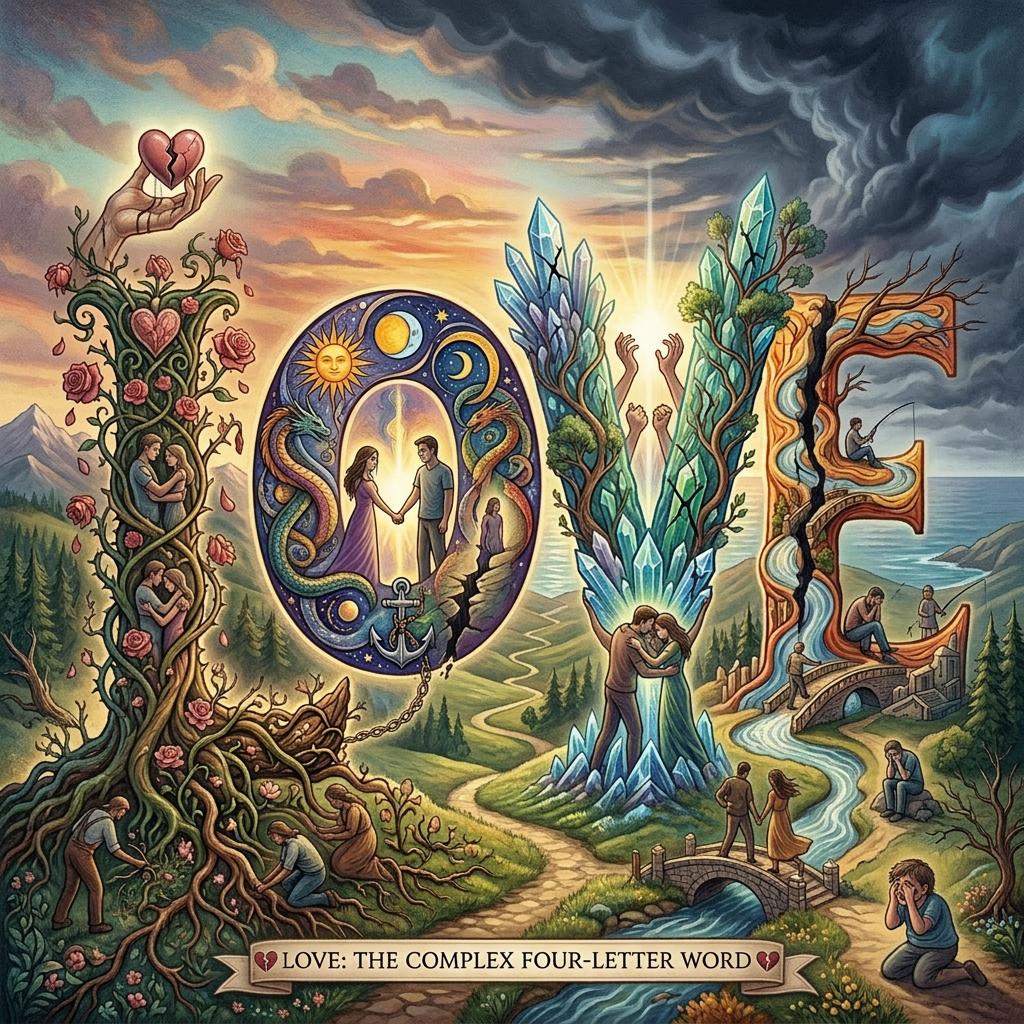
Love Is a four-letter word
You wake up in the middle of the night, your heart racing as if something vital has just vanished. For a brief moment, confusion reigns; you wonder where you are. Then it hits you hard: they’re gone. The silence feels deafening, heavy, almost suffocating. Despite your exhaustion, sleep slips away, and with each attempt to…
 Love Advice Daily